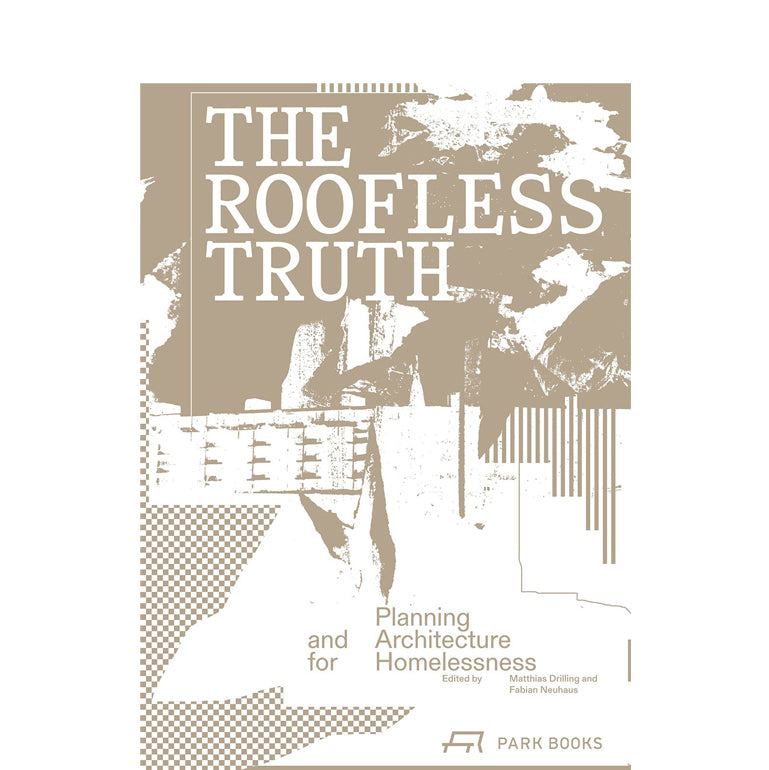

The roofless truth: Planning and architecture for homelessness
The roofless truth: Planning and architecture for homelessness
Homelessness is one of the most pressing social challenges of our time, and is closely linked to issues of urban design and architecture. Homeless people are part of urban society and depend on accessible public spaces and urban infrastructure. Yet, in cities around the world, local governments use policies and urban planning to ward off street people, aiming at making them invisible in the cityscape and deliberately impeding certain forms of stay. Urban design always reflects power structures—it can exclude or open up avenues for participation.
The Roofless Truth brings together contributions by international researchers and practitioners from the fields of architecture, urban development and design, sociology, ethnology, social work, and education. The book highlights how public spaces should be designed to offer protection, dignity, and opportunities for homeless people, and to facilitate encounters and interaction. The featured examples demonstrate that even the smallest spatial decision can determine inclusion or exclusion.
Matthias Drilling, Fabian Neuhaus
Park Books, 2026
29 X 20.5 cm, 492 pages
Couldn't load pickup availability