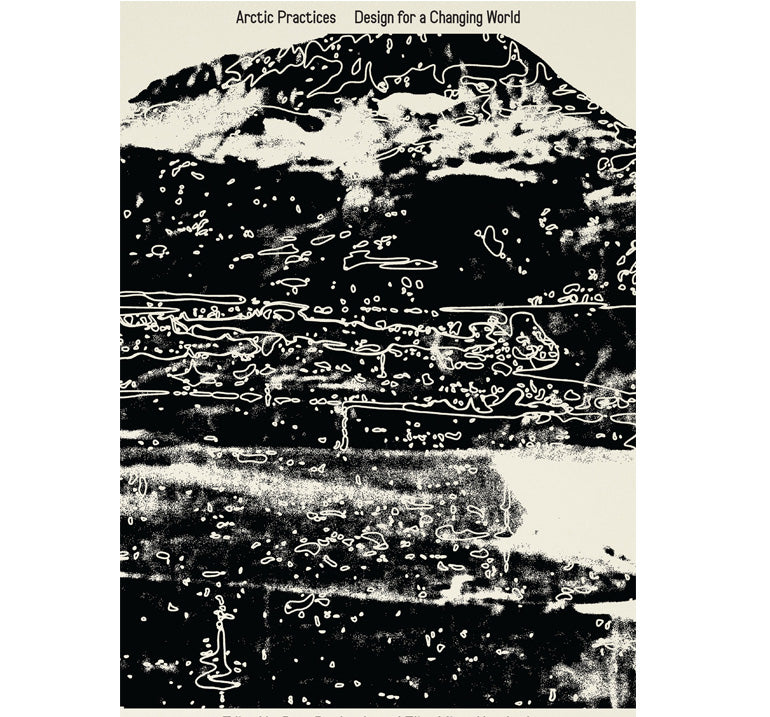

Arctic practices: design for a changing world
Arctic practices: design for a changing world
The contributions shared in Arctic Practices respond to colonial histories, foreground Indigenous livelihoods, and demonstrate how Arctic design practices are adapting to new and changing climatic contexts. In the past, Arctic design (e.g., Arctic architecture, landscape architecture, and urbanization) has been dominated by colonial and nation-state interests, often influenced by design perspectives more appropriate to southern landscapes. Western-centric narratives and design paradigms that suffered from limited understandings of the internal dynamics, unique climatic conditions, and diversity of different people and cultures were often projected and forced—sometimes violently—onto the many different peoples and regions of the Circumpolar North.
Arctic Practices believes that designers (and others) can only move forward by first acknowledging the past; this includes taking seriously the responsibility to avoid committing the mistakes of those who came before them. The stories and images shared in these pages were gathered by deliberately seeking out many different forms of contributions and media in order to more adequately respond to the remarkably rich and varied histories of the world’s northernmost regions.
Developed as a timely contribution to literature on Arctic design, this publication covers 33 chapters and features 45 contributors, including designers, educators, artists, photographers, and filmmakers. Among this cohort, some are Indigenous, some are residents, and some are visitors to the Circumpolar North. But all generously share their ways of designing with or approaching, translating, seeing, or inhabiting changing Arctic landscapes.
Bert de Jonghe, Elise Misao Hunchuck
Actar, 2025
21.5 X 15 cm, 368 pages
Impossible de charger la disponibilité du service de retrait